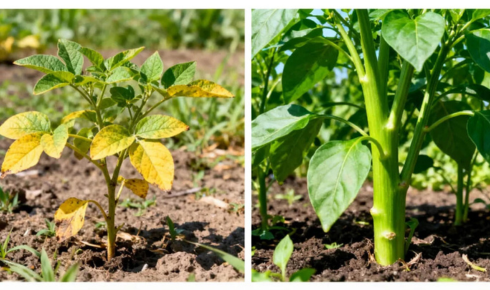
Agricultural operations managing calcareous or high pH soils often face a significant challenge in nutrient management. The natural alkalinity of these soils reduces the availability of essential micronutrients, limiting plant growth even when adequate nutrients are present in the field. This condition, commonly associated with alkaline soil nutrient deficiency, affects crop health, productivity, and fertilizer efficiency.
Traditional unchelated micronutrients frequently react with soil compounds and become unavailable to plants shortly after application. To overcome this challenge, growers are increasingly adopting chelated micronutrients that remain stable in alkaline conditions and support more efficient nutrient uptake.
Why nutrient lockout occurs in alkaline soils
Soils with a pH above 7.5 create conditions where important micronutrients such as iron and zinc react with carbonates and hydroxides present in the soil. These reactions form insoluble compounds that plant roots cannot easily absorb. For additional context, see The Future of Sustainable Manufacturing Lies in Integrated Recycling.
As a result, crops may exhibit symptoms such as chlorosis, stunted growth, poor root development, and reduced yields despite adequate fertilizer applications. This is one of the primary reasons why nutrient availability, rather than nutrient presence alone, has become a major focus of modern crop nutrition programs.
Chelated micronutrients help address this issue by protecting nutrients from adverse soil reactions and keeping them available for plant uptake.
Supporting iron availability with Fe EDTA
Iron deficiency is one of the most common problems encountered in high pH soils. When conventional iron fertilizers are applied under alkaline conditions, the nutrient often becomes unavailable within a short period. A useful related perspective is The Small Business Improvements That Often Lead to Bigger Long-Term Success.
This is where Fe EDTA plays an important role. The EDTA molecule surrounds and protects the iron ion, helping it remain soluble and available to plant roots. By improving nutrient stability, Fe EDTA supports chlorophyll production, photosynthesis, and overall plant health.
Products such as Fe EDTA manufactured by ACI Industries are designed to help growers improve iron availability in challenging soil environments while supporting more consistent crop performance.
Improving crop development through Zinc EDTA
While iron is essential for photosynthesis, zinc is equally important for enzyme activation, hormone production, and root development. Zinc deficiencies are particularly common in alkaline soils where conventional zinc sources can quickly become fixed and unavailable. You may also find Top 5 Connector Types Used in Industrial Automation and Their Applications helpful.
Using zinc EDTA helps maintain zinc availability throughout the crop growth cycle. The chelated structure protects the nutrient from soil interactions, allowing plants to absorb zinc more effectively when it is needed most.
Solutions such as Zinc EDTA from ACI Industries are widely used in crop nutrition programs where maintaining micronutrient efficiency is critical for achieving consistent growth and productivity.
Choosing the right micronutrient strategy
Managing high pH soils successfully requires more than simply increasing fertilizer application rates. The focus should be on improving nutrient availability and uptake efficiency. For a closer look at this topic, read Top 7 Uses of EDTA Disodium Salt in Industrial and Agricultural Applications.
Growers increasingly evaluate factors such as chelate stability, product quality, compatibility with irrigation systems, and field performance when selecting micronutrient solutions. Working with experienced manufacturers helps ensure that nutrient formulations perform reliably under challenging soil conditions.
As a trusted supplier of chelated micronutrients, ACI Industries supports farmers with scientifically developed solutions designed to improve nutrient delivery and fertilizer efficiency across diverse agricultural environments.
Building stronger crop nutrition programs
High pH soils present unique challenges, but they can be managed effectively with the right nutrient strategy. By incorporating Fe EDTA and Zinc EDTA into crop nutrition programs, growers can improve micronutrient availability, support healthier plant development, and reduce losses caused by nutrient lockout. Related coverage: Managing Remote Teams Without Losing Your Mind (or Your Culture).
As agriculture continues to move toward precision nutrient management, chelated micronutrients will remain an important tool for improving fertilizer performance and achieving more consistent crop yields across alkaline soil conditions.