There’s a certain kind of buzz around new technologies that makes everything sound revolutionary. Digital twins fall right into that category—mentioned in conferences, hyped in tech blogs, and quietly adopted by industries you wouldn’t expect.
But strip away the jargon, and the idea is actually quite simple. It’s about creating a virtual version of something real—and using that version to understand, predict, and improve how the real thing behaves.
Sounds abstract at first. It isn’t, really. For additional context, see Quantum Computing, Explained Like You’re Not a Physicist.
What Is a Digital Twin, in Plain Terms?
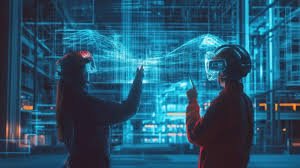
Imagine you have a machine—a factory robot, for example. Now imagine you build a digital model of that machine, one that receives real-time data from sensors attached to the physical version.
That digital model isn’t static. It evolves. It mirrors what’s happening in the real world—temperature changes, wear and tear, performance shifts.
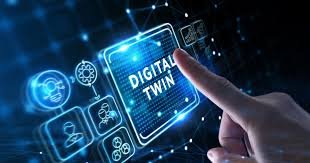
That’s a digital twin.
It’s not just a simulation. It’s a living, updating representation of reality.
Digital twins technology kya hai aur real-world use cases
If you’re trying to understand where this fits in the real world, it helps to look at how industries are actually using it.
In manufacturing, companies use digital twins to monitor equipment and predict failures before they happen. Instead of waiting for a machine to break down, they can fix issues proactively.
In healthcare, digital twins are being explored to model patient conditions—allowing doctors to test treatments virtually before applying them in real life.
Even urban planning is getting involved. Cities are creating digital replicas of infrastructure to manage traffic, energy use, and development more efficiently.
It’s not futuristic anymore—it’s already here, just quietly doing its job. A useful related perspective is The Rise of No-Code Tools: Are We Really Moving Toward a Developer-Free Future?.
Why Businesses Are Paying Attention
At its core, digital twin technology is about reducing uncertainty.
Every business deals with unknowns—machine failures, operational inefficiencies, unexpected costs. A digital twin helps make those unknowns a bit more predictable.
You can test scenarios without real-world consequences. What happens if production increases by 20%? What if a component fails? Instead of guessing, you simulate.
And that shift—from reactive to predictive—is what makes the technology so valuable.
It’s Not Just for Big Industries
There’s a common assumption that digital twins are only for massive corporations with huge budgets.
That’s changing.
As sensors become cheaper and software more accessible, smaller businesses are starting to explore similar concepts. Maybe not full-scale digital twins, but simplified versions—tracking data, analyzing patterns, making smarter decisions.
The entry barrier is lowering, slowly but surely.
The Role of Data (And Why It Matters)
A digital twin is only as good as the data it receives. You may also find LLM Conversational SEO Isn’t the Future. It’s Already Here, and You’re Probably Behind helpful.
If the data is inaccurate, delayed, or incomplete, the insights won’t be reliable. That’s why companies investing in digital twins often focus heavily on data infrastructure—sensors, connectivity, analytics tools.
It’s not just about building the model. It’s about feeding it the right information.
And that, in many ways, is the real challenge.
Where It Gets Complicated
Like any technology, digital twins come with their own set of complexities.
Setting up the system requires technical expertise. Integrating data from multiple sources isn’t always straightforward. And there’s always the question of cost versus return.
Not every use case justifies the investment.
That’s why successful implementations usually start small—testing the concept in one area before scaling it further.
A Glimpse Into the Future
It’s interesting to think about where this could go.
As technology advances, digital twins might become more detailed, more accessible, and more integrated into everyday decision-making. Not just for machines or cities, but potentially for individual processes, even personal health tracking. For a closer look at this topic, read Why You Feel Tired All the Time Even When You Sleep Enough.
It’s a gradual evolution, not a sudden leap.
And that makes it easier to adapt to.
Why It Matters Beyond Technology
At a deeper level, digital twins represent a shift in how we approach problems.
Instead of reacting after something happens, we’re moving toward anticipating it. Understanding systems before they fail. Testing ideas before committing resources.
It’s a more thoughtful, measured way of operating.
And in a world that often feels unpredictable, that kind of control—however partial—can make a real difference.
Final Thoughts
Digital twin technology isn’t about replacing reality. It’s about understanding it better.
By creating a bridge between the physical and the digital, it gives us tools to see patterns, predict outcomes, and make smarter decisions.
It’s not perfect. It’s not simple. But it’s quietly powerful. Related coverage: Bangalore Moves: Flyover Standoffs, Fickle Skies and a Pressure Cooker With History.
And as it becomes more accessible, it might just change how we interact with the world around us—one system at a time.